3 Results
Overall, the Maximum Abundance Threshold approach identified the least restrictive species ranges. While the Ratio Threshold with the 100% modifier resulted in the most restrictive species ranges (Figures 2-4). This was irrespective of the size of the focal region.
In the Oilsands Monitoring Region, the Maximum Abundance Threshold approach identified 534 species followed by the Ratio Threshold at 25% (477), 50% (401), 75% (336), and 100% (241). Some notable species that were included in the Maximum Abundance Threshold but none of the Ratio Threshold approaches were Barn Swallow, Pronghorn, Savannah Sparrow, and Downy Chess (Bromus tectorum).
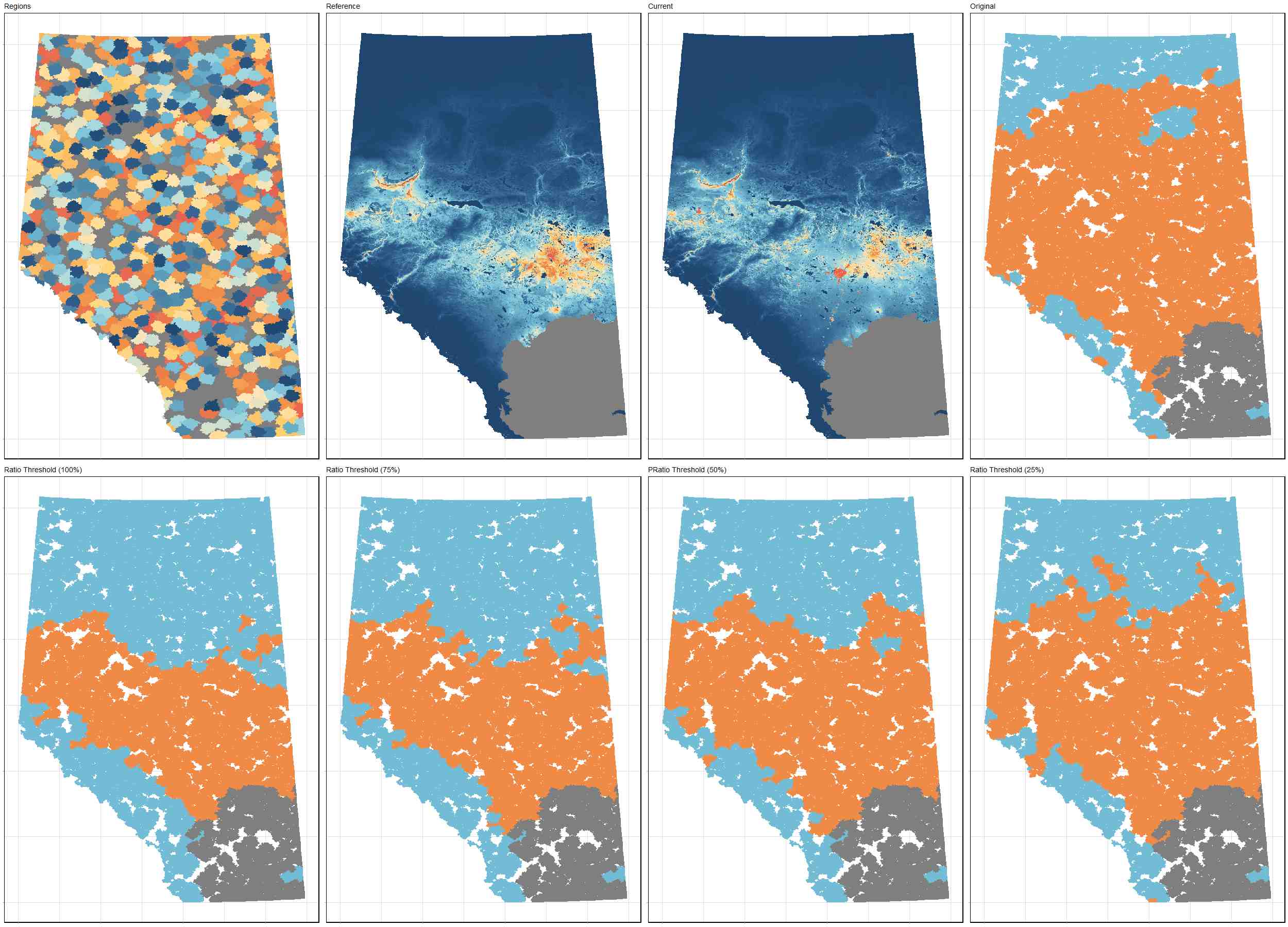
Figure 2 - Abundance, simulated regions (1,000 km2), mean threshold, and ratio thresholds for Blue Jays under both current and reference conditions. Red/Orange indicate high abundance and sites where the threshold indicated the species should be reported on.
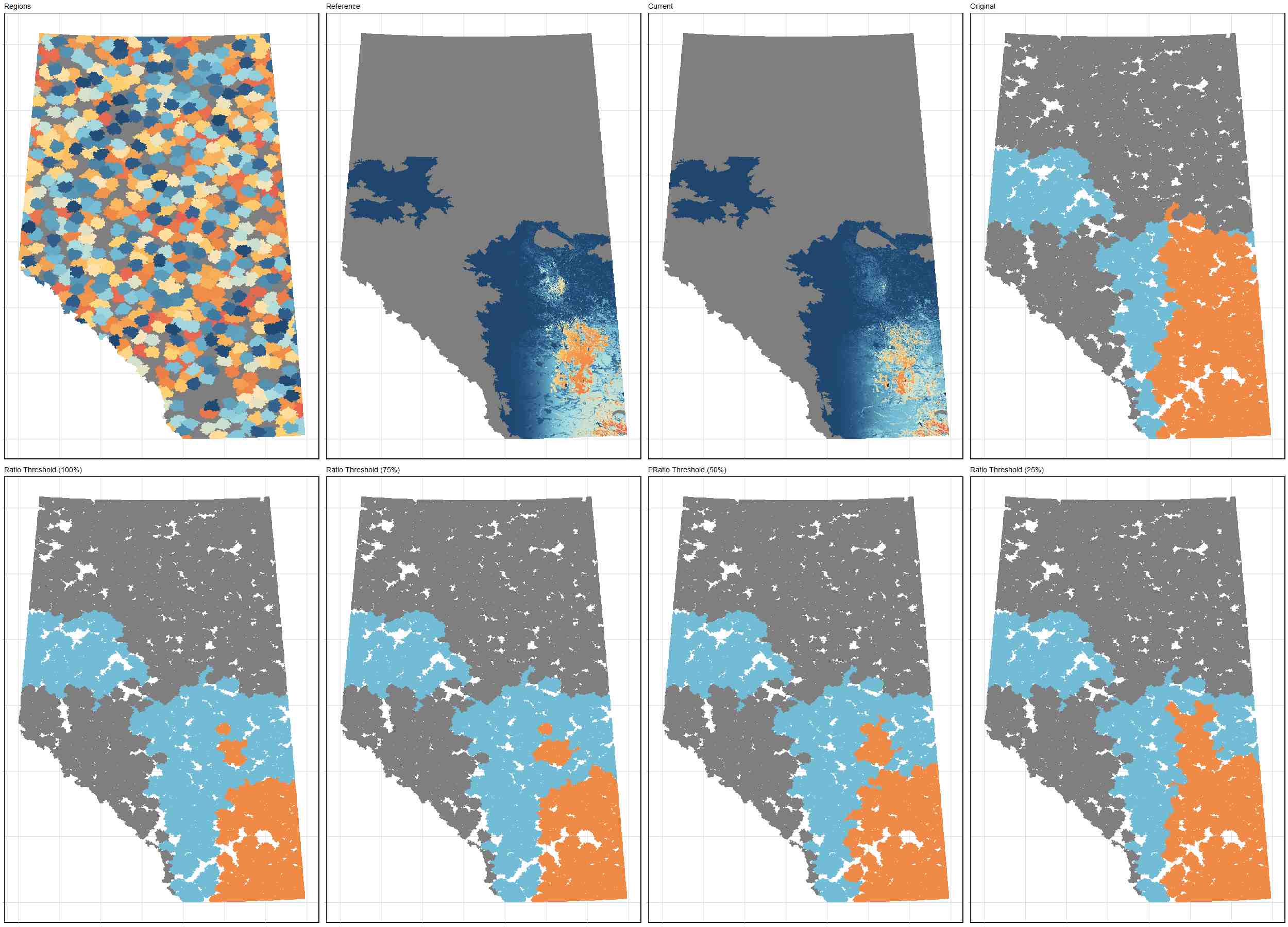
Figure 3 - Abundance, simulated regions (1,000 km2), mean threshold, and ratio thresholds for Pronghorn under both current and reference conditions. Red/Orange indicate high abundance and sites where the threshold indicated the species should be reported on.
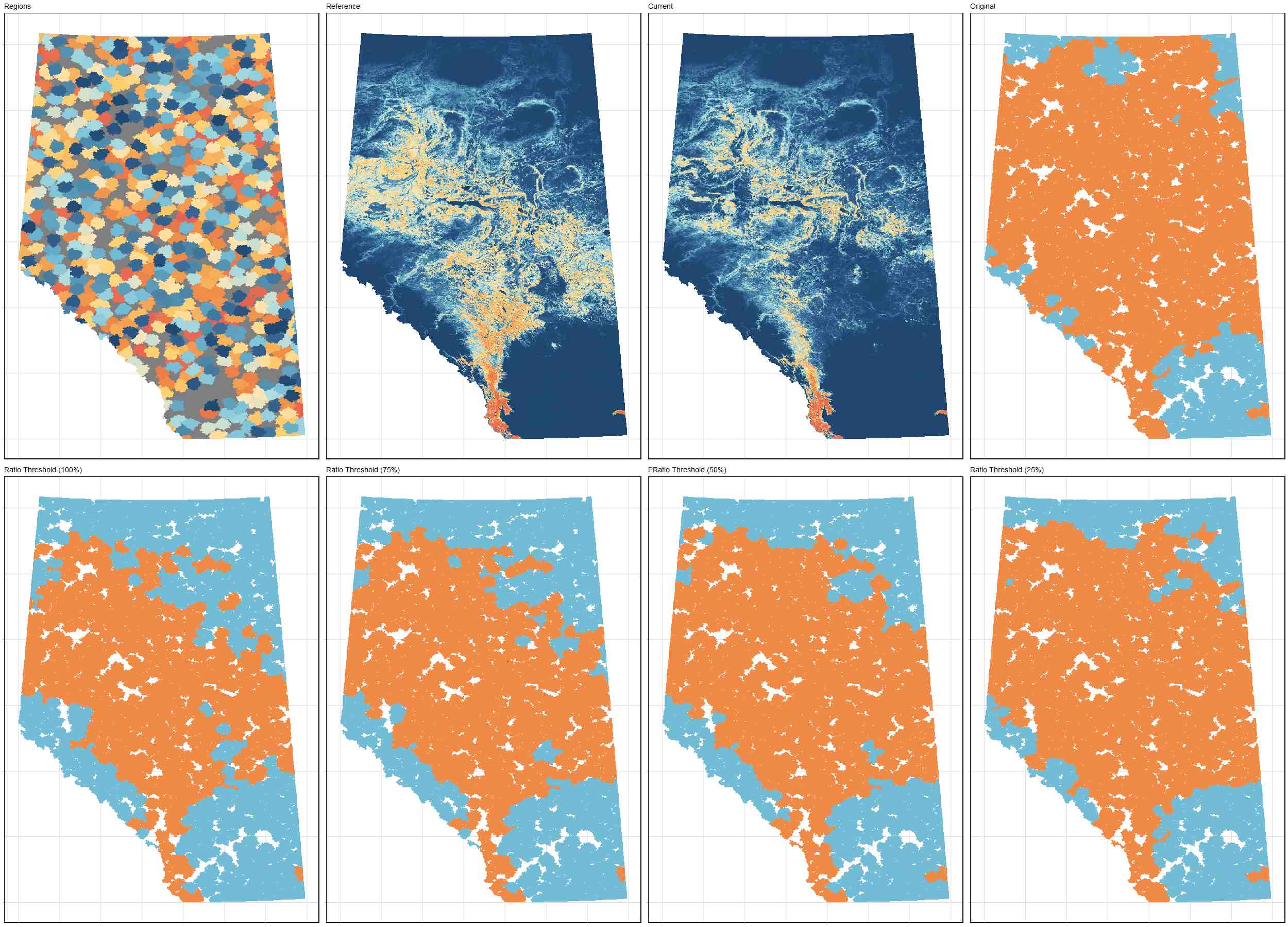
Figure 4 - Abundance, simulated regions (1,000 km2), mean threshold, and ratio thresholds for Red Baneberry (Actaea rubra) under both current and reference conditions. Red/Orange indicate high abundance and sites where the threshold indicated the species should be reported on.